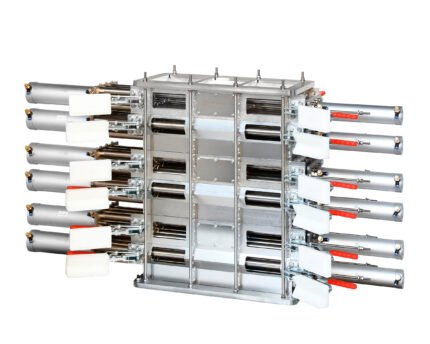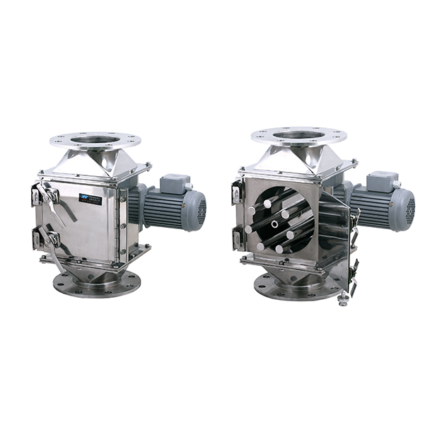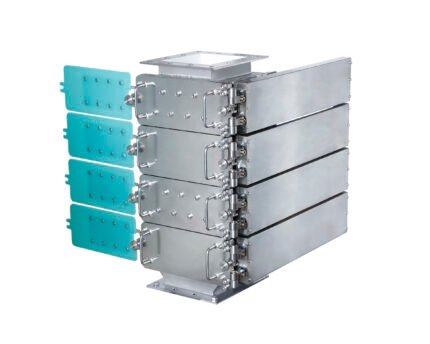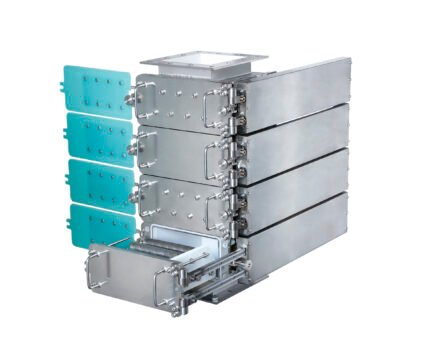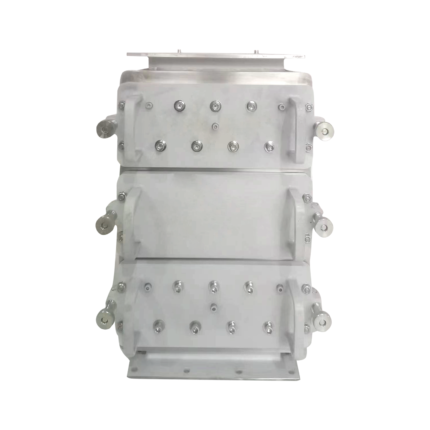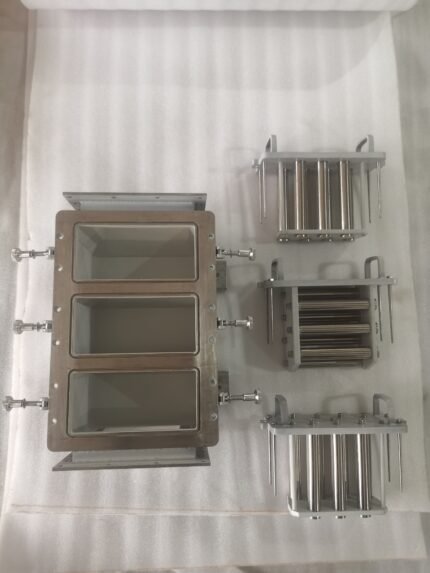


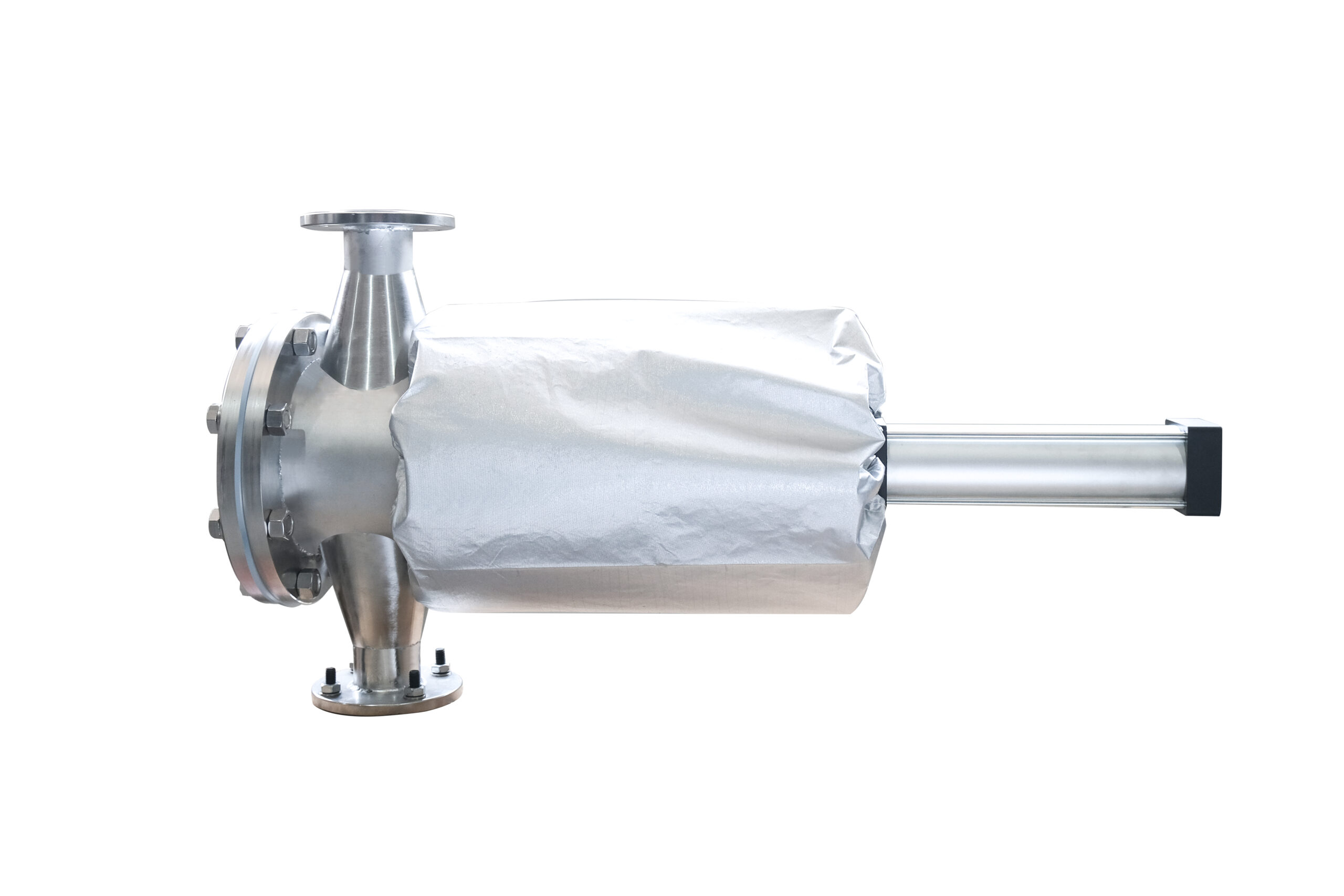
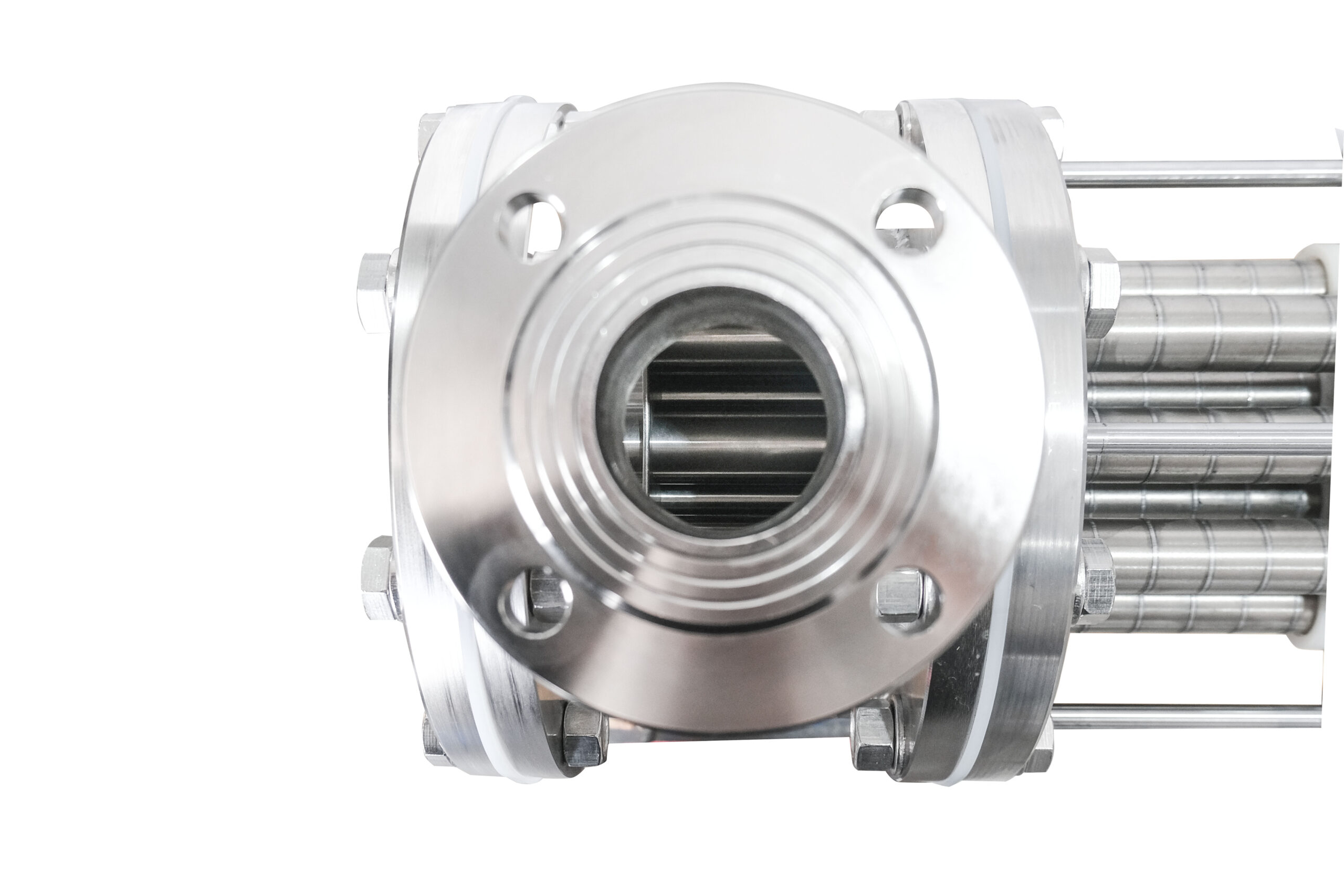
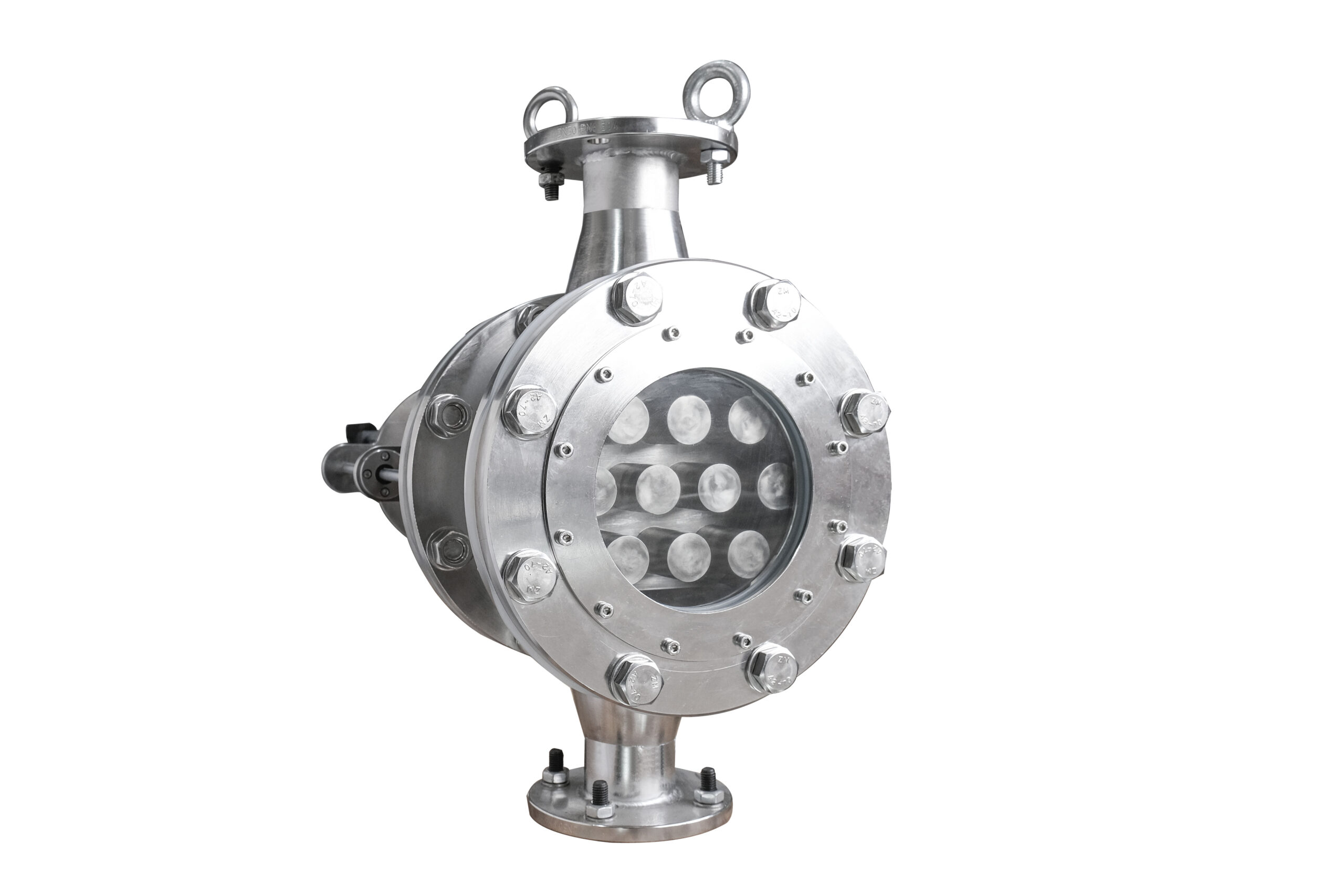
JH-W03 captures ferromagnetic contamination from fluids and semi-fluids in a pipeline. Its reference drawer contains 10 magnetic rods at 12–15 mm intervals. A viewing window and cylinder-driven cleaning arrangement are described for this model; confirm liquid compatibility, operating limits and the cleaning sequence before selection.
What Is the JH-W03 Reference Configuration?
| Item | Published reference |
|---|---|
| Drawer / rods | 1 drawer / 10 rods |
| Rod spacing | 12–15 mm |
| Overall dimensions | 260 × 428 × 581–741 mm |
| Magnetic field | Up to 16,000 G bare; up to 13,500 G outside protective tube |
| Inspection / actuation | Tempered-glass window / push-pull cylinder |
These are model references from the existing JH-W03 specification. Dimensions and field values depend on the final configuration; the bare-magnet value must not be substituted for the product-contact surface field.
Which Rods and Cleaning Arrangement Can Be Specified?
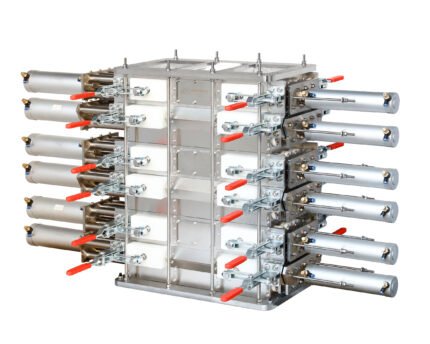
The 3 listed rod options are JH-B standard, JH-L helical-field and JH-Z linear-field. The 10-rod reference uses a push-pull cylinder for the described automated cleaning mechanism. Specify controls, air supply, residue discharge and cleaning frequency. Cylinder actuation does not alone prove cleaning under pressure or uninterrupted flow. Follow the supplied operating procedure.
How Do Liquid Separator Specifications Compare?
| Product | Published construction / geometry | Pressure and temperature basis |
|---|---|---|
| JINHONG JH-W03 | 10 rods; 12–15 mm spacing; viewing window | Confirm for the selected housing, seals, window and liquid |
| Bunting Liquid Magnetic Separator | 316 stainless; 2-, 3- and 4-inch line sizes | Published maximum 10 bar and 120°C; manufacturer source |
The comparison describes published configurations, not a controlled performance test. Dimensions, cleaning mechanisms and acceptance conditions differ. Manufacturer sources checked on 25 October 2026; confirm current specifications with each supplier.
What Operating Conditions Must Be Confirmed?
For this 10-rod arrangement, supply viscosity at operating temperature, flow rate, solids content, line diameter and pressure. The existing JH-W03 page does not provide a numeric pressure rating or rated throughput. Confirm the supplied unit’s pressure, temperature, gasket compatibility and inspection-window limits before installation.
Stainless steel housing and silicone gaskets are described. Request the material grade, finish and hygiene documentation needed for your process; a material description alone is not certification of food or pharmaceutical compliance.
Which Liquid-Trap Alternatives Should Be Considered?
Compare 2 other liquid-trap constructions: the standard liquid trap and the sleeved easy-clean trap. The quick-interface version addresses connection and removal arrangements. Send a line drawing and the required cleaning sequence with your inquiry.
Frequently Asked Questions
Can the JH-W03 cylinder clean the separator while the pipeline remains pressurized?
Do not assume this from cylinder actuation. Confirm the complete cleaning sequence, pressure rating, isolation arrangement and discharge design for the supplied unit. The public reference does not establish permission to clean or open the separator while pressurized.
Should I compare 16,000 gauss or 13,500 gauss when selecting this fluid separator?
The published reference distinguishes up to 16,000 G bare-magnet field from up to 13,500 G outside the protective tube. Compare measurements at the same defined surface, temperature and configuration. Neither number alone establishes the final iron-removal rate.
What information is needed to quote a magnetic separator for viscous liquid?
Send the liquid composition, viscosity at operating temperature, flow rate, solids content, pressure, temperature and pipeline drawing. Describe the contamination and cleaning method. These details determine spacing, material compatibility and the operating configuration.
Request a JH-W03 Configuration Review
Related applications and selection requirements
Review chemical liquid filtration and pharmaceutical line requirements to compare installation, material flow and cleaning requirements. The selected configuration must be assessed for the actual material and operating conditions.