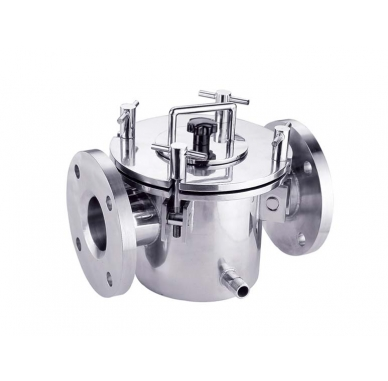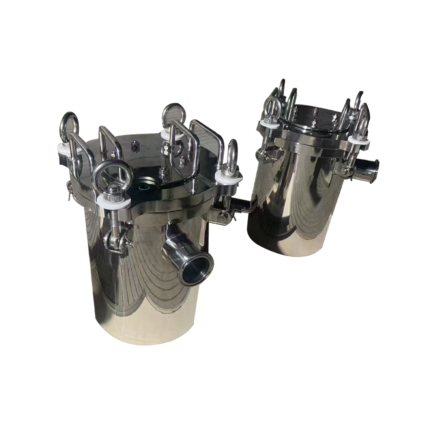
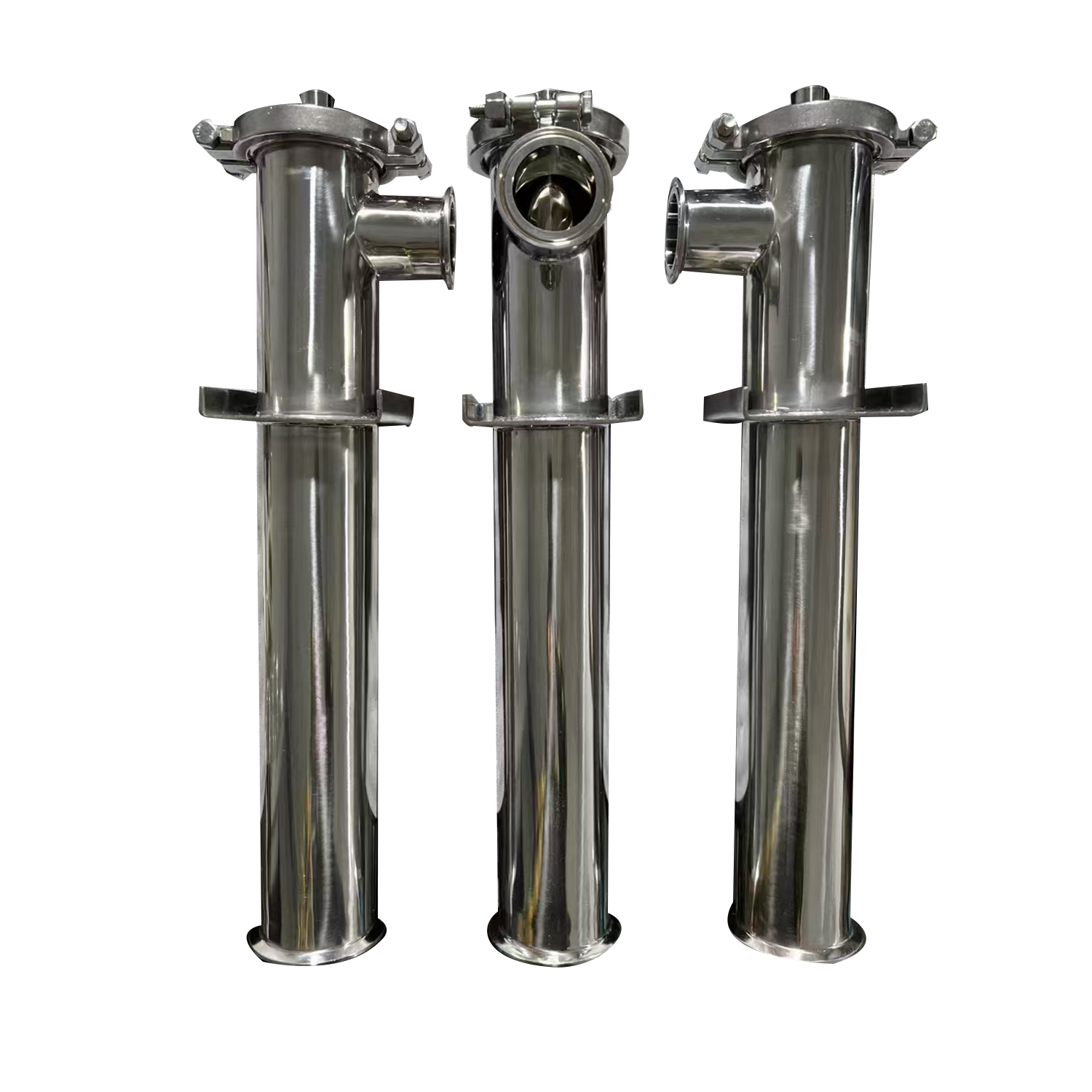
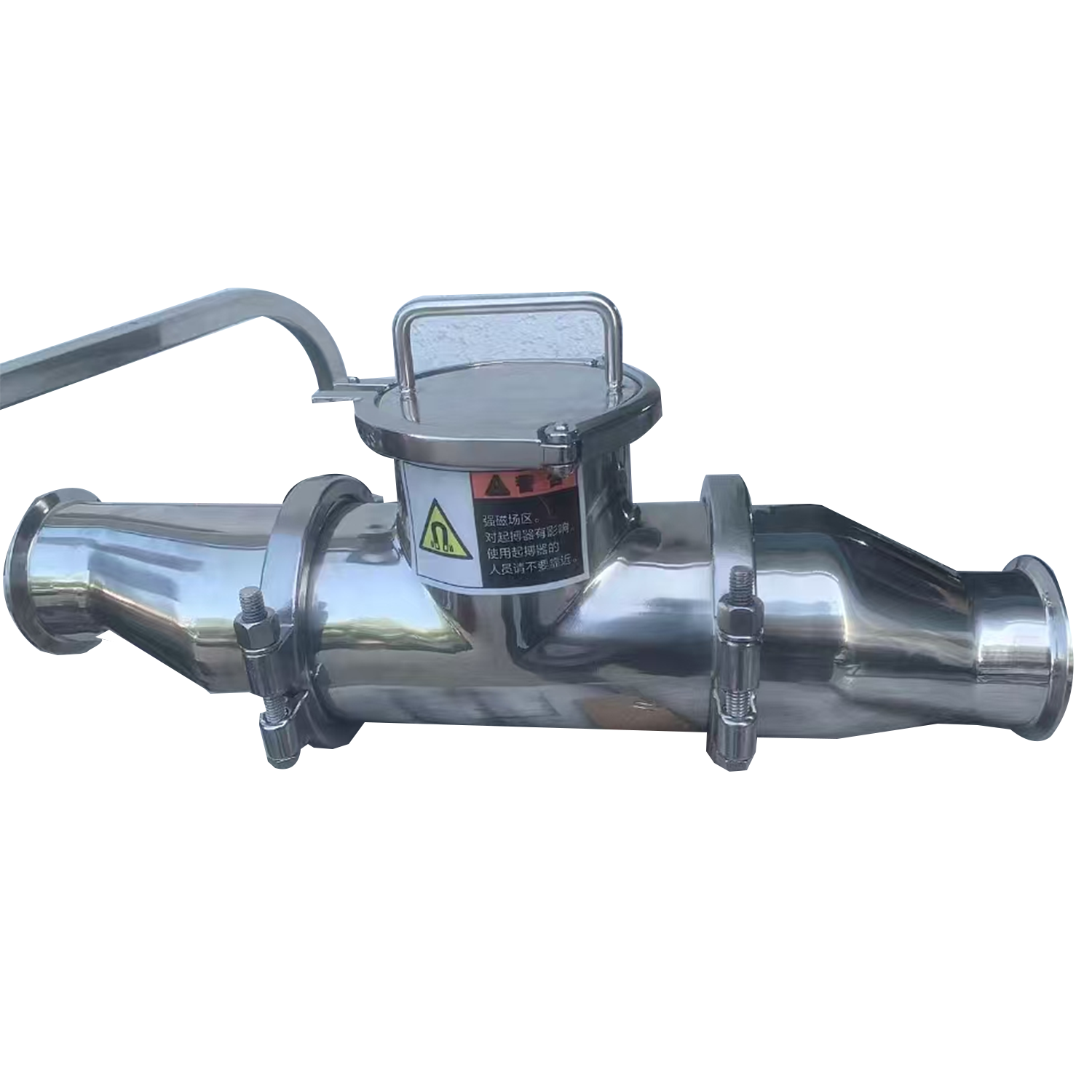
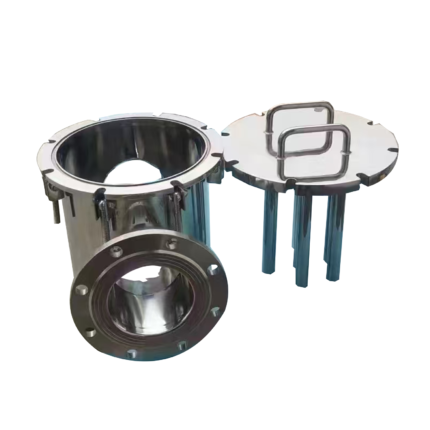
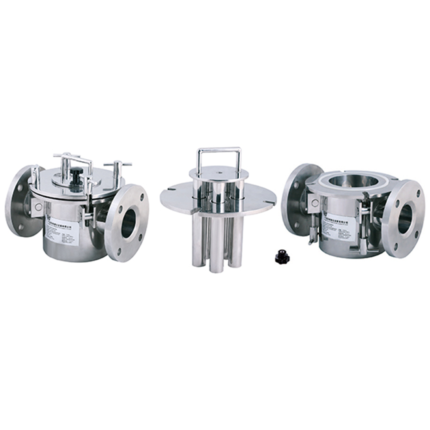
This quick-interface permanent magnetic trap captures ferromagnetic contamination from liquids and semi-fluids in closed pipelines. It combines a non-magnetic housing with a removable magnetic assembly. SS304 and SS316L construction options, connection type and cleaning configuration are selected for the liquid and operating conditions.
Which Construction and Connection Options Are Available?
The 2 listed housing materials are SS304 and SS316L. Connections may use flanges, clamps, bolt plates or quick-release clips. Confirm the actual connection standard, gasket material and installation drawing. Sandblasted, polished or brushed finishes and custom laser identification are available; specify hygiene and surface-finish requirements.
How Do Standard and Easy-Clean Field References Differ?
| Catalog configuration | Published field reference | Selection check |
|---|---|---|
| Ordinary quick-interface type | Up to 15,000 GS | Confirm rod dimensions and measurement surface |
| Easy-clean quick-interface type | Up to 8,000 GS | Confirm sleeve construction and field at the specified surface |
These are configurations, not an adjustable operating range. Magnetic rod dimensions and field strength can be customized. The separate easy-clean liquid-trap product has its own catalog range; do not apply this quick-interface value to every sleeved model.
How Does the Quick-Interface Trap Compare with a Competitor?
| Product reference | Material / connection information | Operating limits |
|---|---|---|
| JINHONG quick-interface trap | SS304 / SS316L; flange or clamp configurations | Pressure, temperature and seals confirmed per order |
| Bunting Liquid Magnetic Separator | 316 stainless; 2-, 3- and 4-inch line sizes | Published 10 bar maximum, 120°C; manufacturer source |
The comparison describes published configurations, not a controlled performance test. Dimensions, cleaning mechanisms and acceptance conditions differ. Manufacturer sources checked on 25 October 2026; confirm current specifications with each supplier.
Does the Catalog Temperature Range Apply to Every Assembly?
The source catalog lists temperature configurations from 80°C to 350°C. This does not mean every assembled trap, gasket or quick-release joint is rated for 350°C. Confirm magnetic material, housing, seals, pressure and temperature together. Do not combine the maximum temperature and maximum field from separate configurations into one specification.
What Is Needed to Specify a Pipeline Installation?
For either of the 2 construction materials, provide the liquid, viscosity, flow, solids content, pressure, temperature, connection standard and removal clearance. Confirm the pressure rating and cleaning procedure before operation. A quick-release connection simplifies access but does not permit opening a pressurized line.
See the standard versus easy-clean selection guide and compare the JH-W03 cylinder-driven design.
Frequently Asked Questions
Can a quick-release magnetic liquid trap be opened without depressurizing the pipe?
No such operating permission is implied by the connection type. Isolate and depressurize according to the supplied equipment procedure before opening. Confirm the rated pressure, seal compatibility and safe cleaning sequence for the selected assembly.
Is the 8,000 gauss quick-interface option the same as every easy-clean magnetic trap?
No. It is the reference for the easy-clean variant in this quick-interface catalog. Other liquid-trap families have different configurations and field ranges. Compare the exact model, sleeve and measurement surface on each quotation.
Can SS316L magnetic liquid traps be supplied with custom pipeline fittings?
SS316L is a listed material option, and connection arrangements can be reviewed against a drawing. Provide pipe dimensions, flange or clamp standard, liquid chemistry, pressure, temperature and cleaning requirements. Confirm the final fitting and gasket specification before ordering.
Request a Quick-Interface Liquid Trap Configuration Review
Related applications and selection requirements
Review food liquid-line selection and chemical process assessment to compare installation, material flow and cleaning requirements. The selected configuration must be assessed for the actual material and operating conditions.