

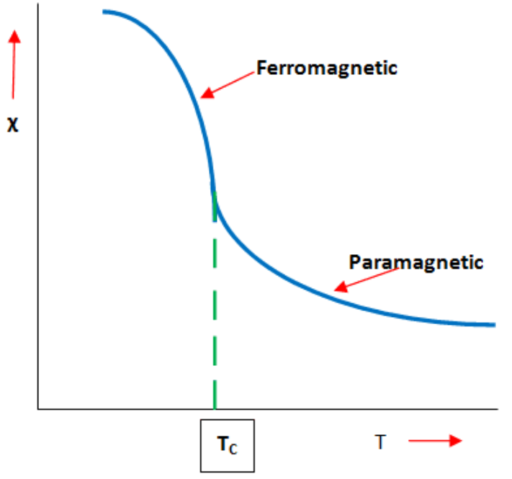
Curie temperature describes a material’s magnetic transition; it is not a safe operating limit. A magnet’s usable temperature depends on its grade, magnetic circuit and operating conditions. Coatings, adhesives and other assembly components can impose additional limits below the magnetic material’s limit.
What Is Curie Temperature?
The Curie temperature marks the transition from ferromagnetic or ferrimagnetic order to the paramagnetic state. It is a material property, not a finished magnet or assembly rating.
What to check before specifying a working temperature
| Item | Required information |
|---|---|
| Magnet material and grade | Use the data sheet for the exact grade, not a material-family maximum. |
| Magnetic circuit | Review geometry, load line and opposing fields at the intended temperature. |
| Thermal exposure | Specify normal and peak temperatures, exposure duration and cycling. |
| Assembly limits | Check coatings, adhesives, seals and other components separately. |
| Acceptance criteria | Define the permitted magnetic performance loss and the test conditions. |
Why Curie temperature is not a working-temperature rating
A permanent magnet can suffer irreversible magnetic loss below its Curie temperature. Do not infer a safe operating temperature from the Curie point alone. Use grade-specific demagnetization curves and review the actual magnetic circuit and thermal exposure.
Factors Affecting the Actual Working Temperature of Permanent Magnets
Shape and Size of the Magnet
Magnet geometry affects the magnetic operating point. Review the grade-specific demagnetization curves and the permeance coefficient (Pc) for the actual magnetic circuit, rather than treating a grade designation as a guaranteed operating temperature.
Degree of Magnetic Circuit Closure
The surrounding magnetic circuit and opposing fields affect the operating point and resistance to irreversible magnetic loss. Evaluate the magnet in its intended assembly at the required temperature.
Selecting a magnet for a heated assembly
Compare NdFeB, SmCo, Alnico and ferrite against the application’s magnetic, mechanical and thermal requirements. A material name or grade suffix alone does not establish the temperature rating of the finished assembly. Send the dimensions, magnetic requirements, normal and peak temperatures, and operating environment for a configuration review.
Can a neodymium magnet operate safely below its Curie temperature?
Not necessarily. Irreversible magnetic loss can occur below the Curie point. The exact grade, magnetic circuit, opposing fields and thermal exposure must be checked. Assembly components may impose a lower limit.
What temperature information is needed when ordering a custom magnet or magnetic assembly?
Provide normal and peak temperatures, exposure duration, thermal cycling and the operating environment. Include magnet dimensions, the surrounding magnetic circuit and the permitted performance loss. The final temperature rating should be confirmed for the specified grade and assembly.
Send your magnet dimensions, operating temperature and required magnetic performance for review.