

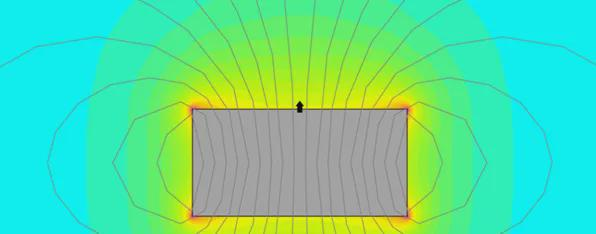
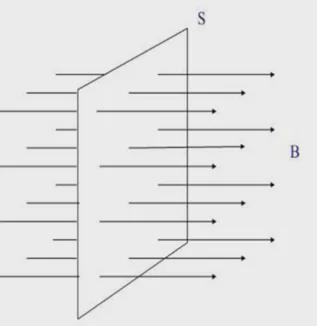
Surface magnetic field is the local magnetic flux density at a specified position. Magnetic flux is the field integrated through a defined surface. Neither measurement alone establishes iron-removal performance; specify the measurement setup and verify the separator with representative material.
What Does Each Magnetic Measurement Describe?
| Quantity | Meaning | Report with the result |
|---|---|---|
| Surface flux density B | A local field measurement, in tesla or gauss | Probe position, direction, gap and temperature |
| Magnetic flux Φ | Integral of B through a specified surface, in webers | Defined surface or calibrated measurement-coil arrangement |
| Remanence Br | Flux density at H = 0 on the relevant demagnetization curve after magnetization | Material grade, temperature and test procedure |
1 tesla equals 10,000 gauss. Values expressed in different units should be converted before comparison.
Is Surface Gauss Always Half the Remanence?
No. There is no universal ratio between a surface reading and Br. Geometry, magnetization direction, probe distance and surrounding magnetic materials affect the reading. Compare measurements taken at the same defined position and under the same conditions.
How Do Gaussmeters and Fluxmeters Differ?
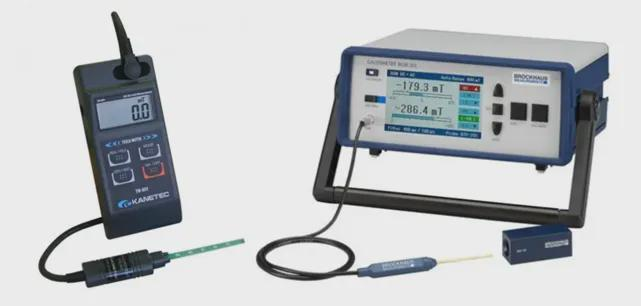
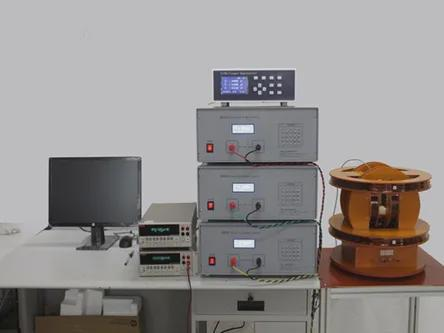
A Hall-probe gaussmeter measures a field component at the probe position. A fluxmeter integrates induced voltage from a measurement coil. With a calibrated Helmholtz-coil arrangement and a defined movement of the sample, it can be used to determine magnetic moment. This is different from energizing a coil to generate a test field.
What Should Be Recorded When Testing Magnetic Tubes?
Record the instrument and probe, calibration status, measurement position, probe orientation, distance from the tube surface, temperature and surrounding fixture. Identify whether the acceptance value is a peak reading or a reading at a specified location. Apply the same method when comparing magnetic tubes or repeat inspections.
Does a Higher Gauss Reading Guarantee Better Iron Removal?
No. Capture also depends on the contaminant’s magnetic response, field gradient, distance, feed presentation and process conditions. Agree on a representative material trial and a method for collecting and measuring the captured contamination. Report field measurements separately from removal results.
Frequently Asked Questions
Why can two suppliers report different surface gauss values for similar magnets?
They may use different grades, geometries, probe positions, gaps or fixtures. Request the measurement method and compare readings under matched conditions before interpreting the difference.
Can a surface gauss test replace a material trial for silica-powder iron removal?
No. A gauss test checks a field reading under specified conditions. A material trial assesses capture with the actual feed and contamination. Keep the two acceptance requirements separate.
What information should I send for a permanent-magnet measurement enquiry?
Send the drawing, grade if known, magnetization direction, operating temperature, required measurement position and acceptance limits. Include the assembly or separator conditions that affect the result.
For component selection, review our permanent magnets. For application review, Discuss Your Magnetic Testing Requirements.